However, the logic of haunting provokes an consciousness of the complexity of “lacking,” enabling us to make use of Holbrooke’s memoir to generate information about women within the Bosnian peace process. I observe lacking women within Holbrooke’s memoir to highlight how their ghostly presence can tell a big story about the Bosnian peace course of.
Only a handful of research discover gender issues or the presence of girls within the Bosnian peace process. These analyses are generally limited to noting how few women were current and how this shapes feminine experiences in postwar Bosnia-Herzegovina. The Swedish international NGO, Kvinna till Kvinna (Women to Women) investigated the Dayton peace negotiations. The report highlights that the method bosnia women featured few women and was “a dialogue of men,” and at Dayton, there have been no women within any of the regional negotiating groups (Lithander 2000, 20). Scholarly research also highlights that ladies’s exclusion from Dayton continues to form feminine and feminist postwar experiences as residents (Chinkin and Paradine –76; Björkdahl 2012, 295–99; Deiana 2016, 104–6).
They reduce his throat and sent the rest of the individuals to a camp in Bileca. Policymakers in the US and elsewhere accepted at face worth the narrative that “ethnic rivalry” was inevitable within the area. The lack of connection to folks on the ground—particularly women—crippled their capability to mount an efficient response. When, finally, peace was negotiated, not a single Bosnian lady was present. Mass rape was used as a army device—predominantly towards Bosnian Muslims—alongside forced impregnations of ladies and different brutal types of sexual violence.
These representations draw upon gendered spatial dynamics of the Balkans, including Bosnia-Herzegovina, as a place of journey for white Western men. Postcolonial literature demonstrates how “The Balkans” continues to be strengthened as an “different,” the place (Balkan) “failures” bolstered a constructive sense of “European,” to which “The Balkans” does not fairly belong (Todorova 1997, 1–37). Ultimately, peacebuilding processes in Bosnia-Herzegovina rely upon representations of “deviant, threatening and hyper-masculine models of masculinity requiring punishment and correction by the West” (O’Reilly 2012, 538). Richard Holbrooke’s memoir, To End a War, is the focus of this evaluation as a result of he’s frequently held up as the important thing protagonist of peace in Bosnia-Herzegovina.
The analysis occurred against a level of uncertainty in regards to the viability of doing research on women and gender in the Bosnian peace course of. Several respondents to interview requests during 2013 and 2014 exclaimed that, as a result of there were no women present, there was little to seek out out. For this cause, as soon as in the area, I altered my research focus to explore constitutional reform and the Bosnia & Syria initiatives. Retrospectively, upon transcribing the interviews, I discovered that female absence from the Bosnian peace process resurfaced in the course of some of these interviews, suggesting that the specter of missing women haunts feminist and women’s organizing right now. Third, following specters matters for how we make sense of peace processes.
Remote studying sessions with Nepal’s women MPs
If we only explore peace processes the place female bodies are visible, or seek to make feminine bodies visible, then this constrains our investigation to a slender set of circumstances. To break this cycle, we need to transcend the declare that there were no women present, and undertake a sustained consideration of missing women to comprehend what “work” absence does. Merely noting that no, or only some, women were present serves to obscure the vary and complexity of “lacking” that sustains patriarchal practices inside peace processes, negotiations, and agreements.
” Gender neutrality refers to the notion that a selected concern is nothing to do with gender, harmful because the very “norm of neutrality is profoundly gendered” (Chappell 2006, 226). Grebäck and Zillén (2003, 2–9) point out that the apparently gender-neutral Dayton Peace Agreement has profound gender results. ” Bosnia-Herzegovina has a collective presidency made up of directly elected representatives of Serbs, Croats, and Muslims/Bosniaks. ” Missing within the Bosnian case carries numerous connotations with the cases of lacking persons in Bosnia. This is not my intended use here. It is helpful to consider this in relation to trauma, collective reminiscence, and hindsight.
Their facial features are rather gentle, but these women mastered the art of makeup and are able to subtly make their features stand out more. Women in Bosnia wouldn’t have turn out to be known as Europe’s most eligible brides if it wasn’t for his or her mesmerizing appearance. Bosnia and Herzegovina belong to the Balkan area, which heavily influenced the looks of native women. Bosnia and Herzegovina gender profile Archived at the Wayback Machine, IFAD, 5 March 2007. The Women of Bosnia & Herzegovina, the guardian, guardian.co.uk, 30 May 2012.
Breaking down gendered power norms during the pandemic and beyond
A French account described the bravery in battle of Bosnian Muslim women who fought in the struggle. Women for Women International was based in 1993 by Zainab Salbi and Amjad Atallah to supply financial and emotional assist to women displaced by the Bosnian War. The legacy of genocide, sectarian violence, and systematic rape that occurred during the war remains evident at present because the country struggles to rebuild and redefine itself as a 21st century democracy. ” The time period gender issues refers to overt and specific discussion about gender through the peace course of. However, the looks of a ghost when there’s something to be done prompts us to rethink the temporal relationship between data and transformation.
In the Balkan wars, women had been targets. In postwar governments, they’ve been pushed out of sight.
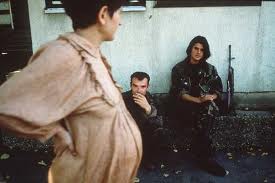
Ghosts permit us to occupy the past, current, and future at the same time. Specters from the past emerge in our current, and crucially, “gesture in direction of a nonetheless unformulated future” (Davis 2005, 379). Activism is formed by a fancy temporality of past, current, and future (McLeod 2013, 177; 2016, 24–5, 150), and so it ought to hardly surprise us that the specter of feminine exclusion from the peace means of the 1990s haunts up to date feminist campaigns for elite political transformation. To think about these questions, we have to return to the interview context. As mentioned earlier, interviews happened within the context of ongoing debates in Bosnia-Herzegovina about constitutional reform, as well as transnational feminist goals for inclusion in peace negotiations.
Women’s rights in Yugoslavia made immense strides after WWII, including gaining whole legal equality and the proper to vote. Rapid industrialization and rebuilding propelled women into the general public sphere and the labour drive in document numbers. After the war, the Anti-Fascist Women’s Front found that girls had been mostly undereducated, almost eighty five-90% illiterate, over-exploited in domestic, agricultural, and industrial work, trapped in patriarchal family modes, and with an entire lack of feminist consciousness.
Perhaps it’s a cultural trait shared with a number of the other Slavic races. Last 12 months on International Women’s Day, three Bosnian pals got here across an advert campaign for pita chips using slogans like “girl energy,” and “you can do it” in a tawdry try and capitalize on the annual celebration of women on March 8 to sell snack meals. Frustrated by what they saw because the commercialization of feminism and the women’s motion, Masha Durkalic, Amila Hrustic Batovanja, and Hatidza Gusic decided to do one thing to mark the contributions of girls to Bosnian society in a dignified means. On social media they started sharing photographs and brief biographies of Bosnian women all through historical past with important achievements in schooling, literature, the humanities, politics, and different fields. Inclusive Security’s bold objective is to vary the worldwide safety paradigm.